Comprendre vos options

Inpatient rehab for substance addiction

If you’re considering inpatient rehab, you’re in the right place. We offer supportive, live-in programs designed to help you stabilise, recover, and rebuild your life.

Faites une auto-évaluation ou parlez à quelqu'un dès maintenant, sans aucune obligation.

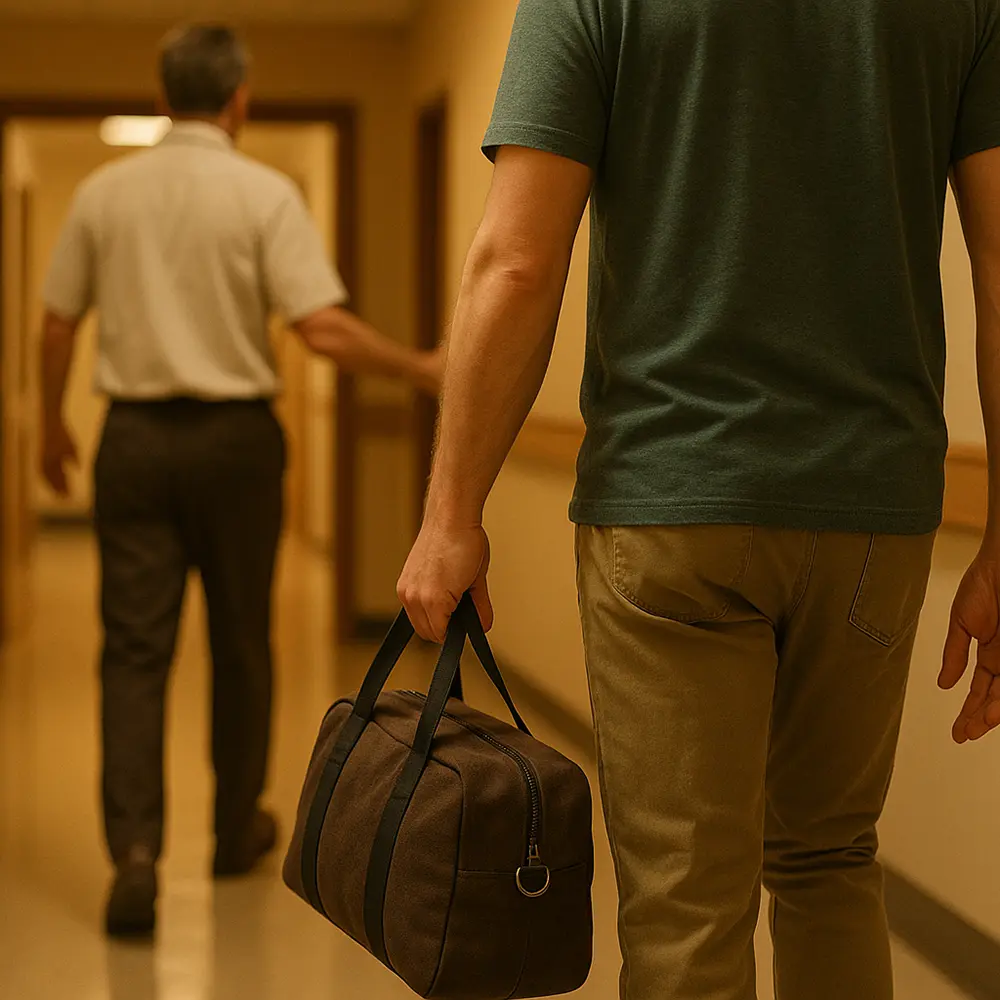
A warmly lit hallway inside the rehab facility, with a staff member walking slightly ahead of a new arrival carrying a small overnight bag. The focus is on the bag in the person’s hand and the gentle motion of the walk, with the staff member’s hand mid-gesture pointing toward a doorway. Faces are not visible — the scene conveys arrival, guidance, and reassurance.

Medically supervised detox options

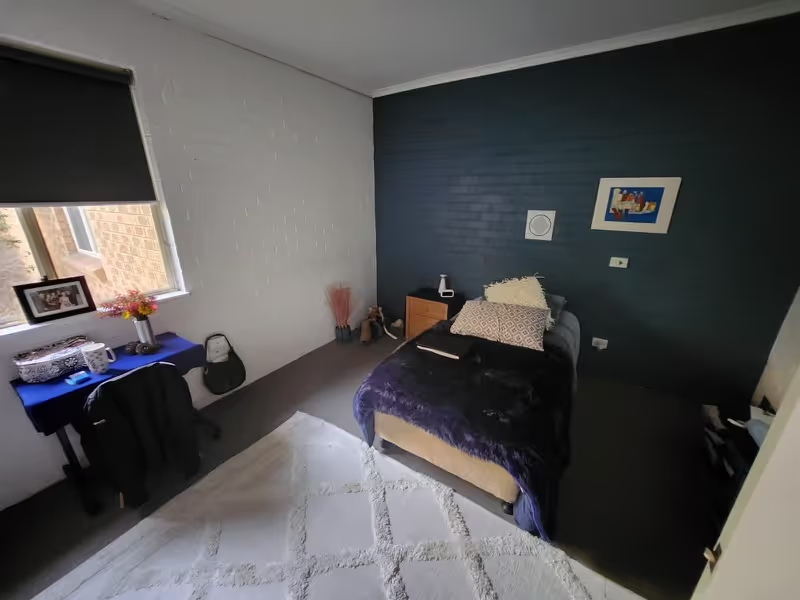
Private inpatient rehab with private rooms and private ensuite

Tailored inpatient rehab programs

Ongoing recovery and relapse support

A long table in a bright, communal space covered with open notebooks, water bottles, and pens. Several people sit around it in relaxed postures, mid-discussion, with one person’s hand raised slightly to speak. The angle is from the far end of the table, focusing on the materials and body language — signalling collaboration and routine in treatment.
Un endroit sûr pour recommencer

What is private inpatient rehab?

Inpatient rehab is a live-in recovery service for people experiencing serious addiction or mental health challenges. It offers structured care, safety, and support while you stabilise. At The Hader Clinic, our inpatient rehab programs combine medically supervised detox, therapeutic group work, one-to-one counselling, and relapse prevention to help you create lasting change.

Whether you’re struggling with alcohol or drug addiction, managing co-occurring mental health issues, or feeling stuck in a harmful living situation, we’re here to guide your recovery. Many of us have walked this path ourselves. We know how overwhelming it feels, and we also know what’s possible when the right support is in place.

  • Our inpatient treatment is suitable for substance use and dual diagnosis.
  • We’re a medically managed, trauma-informed therapeutic centre.
  • Every program includes a tailored recovery plan created with your care team.
Structure, safety, and expert support

What’s included in our inpatient programs

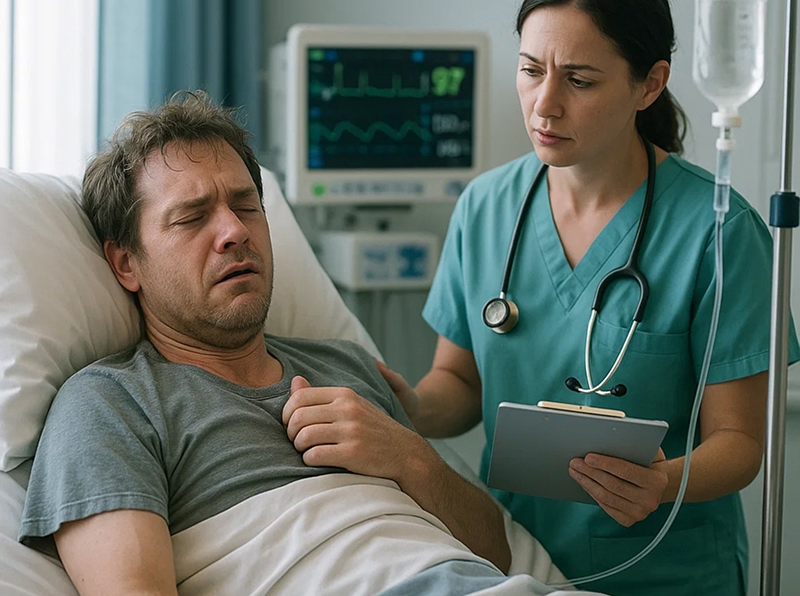
We provide round-the-clock care (24/7 Nurses) in a residential setting, with therapy, detox, education and relapse prevention tailored to your unique needs.

What to expect day-to-day

  • Every inpatient stay includes access to a private room and on-site medical support.
  • Our inpatient program begins with a supervised withdrawal and medical detox process.
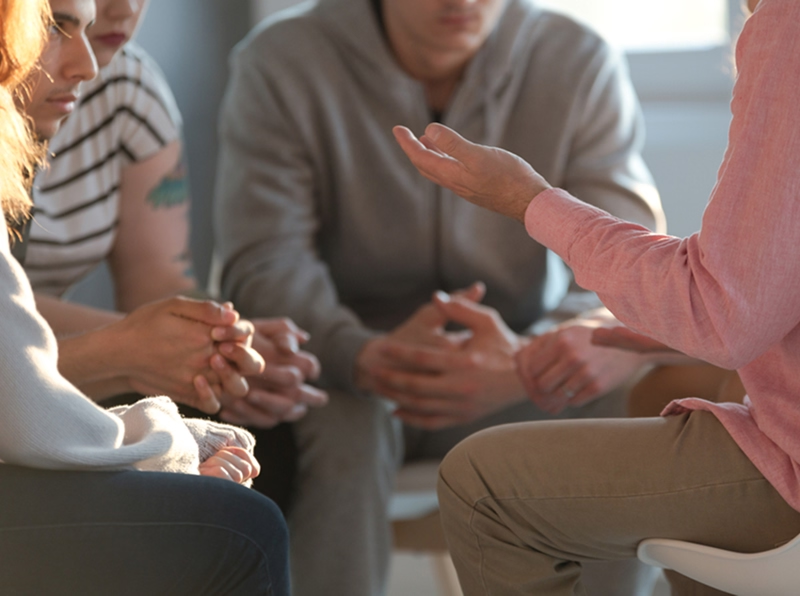
  • You’ll participate in individual and group therapy sessions led by experienced clinicians.
  • A multidisciplinary care team will build a treatment plan focused on your goals and health.
  • Daily activities support managing urges and cravings, and teach practical relapse tools.
  • Case managers help you plan for discharge, community reintegration, and ongoing recovery.
A complete pathway to healing

Explore our inpatient addiction treatment services

We offer a range of specialised inpatient rehab services to meet different needs and circumstances, including dedicated care for alcohol, drug, and mental health recovery.

Réadaptation pour alcooliques hospitalisés

24/7 medical support, targeted therapies and a safe environment for alcohol addiction recovery.

Inpatient Drug Rehab

Prise en charge de toutes les formes de toxicomanie, du cannabis aux substances synthétiques.

Réadaptation psychiatrique en milieu hospitalier

Support for mental health and addiction through dual diagnosis care.

Understanding the scope of addiction

Inpatient treatment for addiction is more important than ever

According to recent data on illicit drug use, almost half of all Australians over 14 have used illicit drugs in their lifetime, highlighting just how widespread this issue has become.

Addiction is not a failure. It’s a health condition.

Many of us at The Hader Clinic have lived through addiction ourselves. We know firsthand that this isn’t about weakness or willpower — it’s about survival. Addiction rewires the brain, making the pursuit of relief more powerful than anything else. Inpatient rehab gives people the safety and support they need to break that cycle, reset their nervous system, and begin to feel like themselves again.

Why outpatient care isn’t always enough

When you’re trapped in cravings or using just to function, once-a-week therapy isn’t enough. Inpatient care offers the pause button. It’s a reset, where you can fully focus on recovery with no distractions.

  • Outpatient care can’t offer 24/7 supervision or safety.
  • Home environments often reinforce substance use triggers.
  • Relapse rates are higher without a structured rehab stay.

What to expect from a medically managed program

We don’t just hand you a bed and a timetable. Our care is deeply individualised and medically informed, from supervised detox through to the final relapse prevention session. Every person is treated with compassion and clinical insight.

  • Support through detox and post-acute withdrawal.
  • On-site access to medical and psychological services.
  • A personalised, evidence-based treatment plan.

Why dual diagnosis support matters

Most of us didn’t use drugs just to party; we used them to cope. We see anxiety, trauma, depression and addiction as part of the same story, and our dual diagnosis approach helps untangle it.

  • Anxiety, depression, or trauma can worsen addiction.
  • Misdiagnosis or under-treatment can lead to relapse.
  • Dual diagnosis care is critical for long-term stability.

Inpatient care helps rewire behaviour

In rehab, change happens in the small moments: a hard truth in group, a breakthrough in counselling, a day you make it through without using. We help you turn those moments into habits.

  • CBT and DBT teach emotional regulation and insight.
  • Group therapy fosters interpersonal communication.
  • Clients develop skills for ongoing real-world recovery.
OUTIL D'AUTO-ÉVALUATION CONFIDENTIEL

Vous vous inquiétez au sujet de votre consommation d'alcool ou de drogues ?

Ce petit questionnaire confidentiel prend moins de deux minutes et peut vous aider à comprendre ce qui se passe. Choisissez la catégorie qui vous semble la plus pertinente — qu'il s'agisse d'alcool, de drogues ou d'un mélange de préoccupations — et nous vous guiderons à travers quelques questions simples auxquelles vous répondrez par oui ou par non.

À la fin, nous vous dirons si vos réponses suggèrent qu'il est peut-être temps d'envisager une cure de désintoxication et nous vous proposerons des options sûres et confidentielles pour vous aider à vous lancer.

Répondez au questionnaire dès maintenant
Programs that support your journey

Comment nous vous aidons à guérir

Recovery is never one-size-fits-all. That’s why we offer more than just inpatient care. From hospital detox to transitional housing, family support, court-ordered rehab and early interventions, our clients have access to a true continuum of care. We support every stage of recovery with structured programs and trauma-informed guidance.

Programme résidentiel

Réadaptation en résidence avec soutien structuré, thérapie et formation aux compétences de la vie courante dans un environnement sûr et axé sur le rétablissement.

Jeune couple se tenant la main pendant une séance de conseil, cherchant du soutien à travers une thérapie familiale et relationnelle.

Programme familial

Éducation, soutien de groupe et counseling pour aider les familles à comprendre la dépendance et à soutenir le rétablissement de leur proche.

Une femme participe à une séance de rétablissement virtuelle depuis son domicile, suivant une thérapie structurée dans le cadre du programme de rééducation en ligne Hader at Home.

Hader à la maison

Un programme de rétablissement entièrement numérique comprenant des contrôles quotidiens, une thérapie en ligne et des cahiers d'exercices autoguidés pour les soins post-réadaptation.

Une femme brune sourit et partage une avancée personnelle lors d'une thérapie de groupe, célébrant les progrès accomplis dans son parcours de rétablissement en ambulatoire.

Programme ambulatoire intensif

Soutien structuré en matière de dépendance, comprenant une thérapie, des séances de groupe et la prévention des rechutes, conçu pour s'adapter à la vie quotidienne.

Un résident discute avec son conseiller en réadaptation.

Conseil

Thérapie tenant compte des traumatismes, counseling en matière de toxicomanie et soutien familial disponibles en personne ou via des séances en ligne sécurisées.

Une femme embrassant son partenaire après une intervention sincère à la maison, lui offrant son soutien et ses encouragements alors qu'il accepte de chercher de l'aide pour lutter contre sa dépendance.

Interventions

Soutien professionnel pour aider les familles à mettre en place une intervention sûre et structurée et à orienter leur proche vers un traitement.

Vue depuis une résidence privée de luxe donnant sur un jardin sablonneux et le front de mer, avec des chaises longues et un aménagement paysager tropical conçu pour un repos paisible et discret.

Rééducation des cadres

Traitement privé et individuel dans un cadre luxueux, en toute discrétion et avec un programme de rétablissement personnalisé.

Hommage à l'ANZAC Day avec un fusil vintage .303 de l'armée australienne, un chapeau mou et un insigne représentant le soleil levant, des plaques d'identité de soldat, une couronne de fleurs et le drapeau australien en arrière-plan.

Réadaptation DVA

Soins hospitaliers spécialisés tenant compte des traumatismes pour les anciens combattants et les premiers intervenants, entièrement financés pour les clients admissibles du ministère des Anciens Combattants.

Un résident assis sur un canapé dans un espace commun, travaillant sur son journal intime dans le cadre de sa réadaptation ordonnée par le tribunal.

Réadaptation ordonnée par le tribunal

Programme hospitalier structuré comprenant une cure de désintoxication, une thérapie et un rapport médico-légal afin de satisfaire aux exigences en matière de caution ou de condamnation.

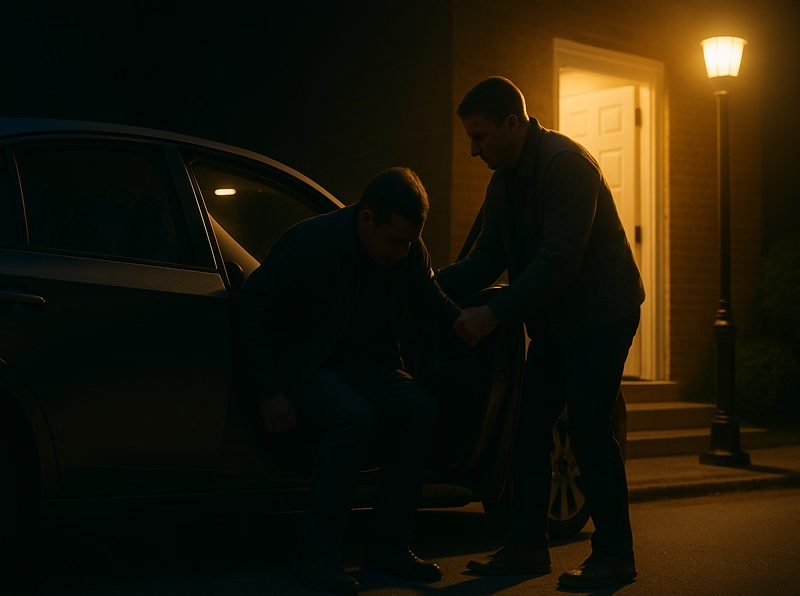
Un homme vivant dans un logement de transition lace ses chaussures alors qu'il se prépare pour une nouvelle journée de travail, reconstruisant sa vie et son indépendance après une rééducation en milieu hospitalier.

Logement de transition

Hébergement axé sur le rétablissement, avec thérapie, structure et soutien pour faire le pont entre la réadaptation et la vie autonome.

Séance de thérapie de groupe de soutien dans un centre de désintoxication médicale, où divers clients partagent leurs expériences et où un psychologue encourage gentiment un nouveau participant.

Désintoxication à l'hôpital

Désintoxication sous surveillance médicale 24 heures sur 24, 7 jours sur 7, dans un hôpital privé agréé, comprenant une aide au sevrage et des soins psychiatriques.

Begin with a single step

What happens when you reach out?

étape 1

Talk to someone who gets it

We’ll listen without judgment and help you understand your options.

étape 2

Get a personalised plan

We’ll talk you through treatment pathways that align with your needs.

étape 3

Enter care when you’re ready

We’ll coordinate admission and help you prepare for your stay.

Nous sommes là quand vous êtes prêt : prenez rendez-vous pour un appel ou discutez avec quelqu'un dès maintenant.

Deep care, not surface solutions

Ce qui rend notre programme unique

We’re not just another rehab centre. Many of us achieved long-term sobriety. Our care is honest, trauma-aware, and focused on long-term outcomes.

We treat the whole person

Medical, psychological, emotional, and spiritual care.

We’re run by people with lived experience

Many of our staff are in recovery themselves.

We offer true end-to-end support

Detox, rehab, aftercare and relapse prevention.

We help you rebuild relationships

Support for families, connection, and community.

Our accreditation gives you peace of mind

We meet Australia's highest clinical standards

We’re fully accredited under the NSQHS Standards through the ACSQHC. Our team follows national guidelines to deliver safe, evidence-based care in every aspect of treatment.


More ways we support recovery

Other rehab services we offer

We offer a range of evidence-based services beyond inpatient care to meet different needs, goals, and stages of the recovery process.

Rééducation ambulatoire

A flexible recovery option that allows you to stay engaged with life while still receiving structured addiction treatment.

Réadaptation à court terme

Short-term live-in rehab programs are designed to stabilise your physical and mental health over 14 to 28 days.

Prévention des rechutes

Our relapse prevention programs help you maintain recovery by strengthening mindset, support, and daily habits.

Rééducation d'urgence

Immediate access to care when crisis hits, with admissions fast-tracked to begin detox and treatment quickly.

Real stories, lasting recovery

What our clients say about their experience

We’re proud to support long-term recovery journeys. Hear from people who’ve walked this path in their own words, and in their own time.

Ali Ademi

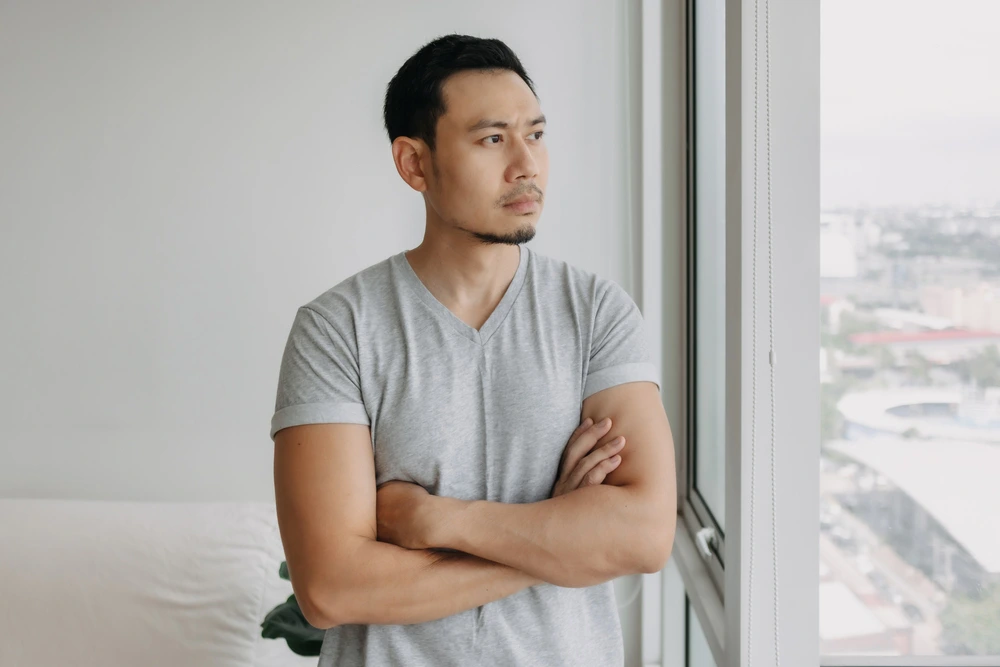
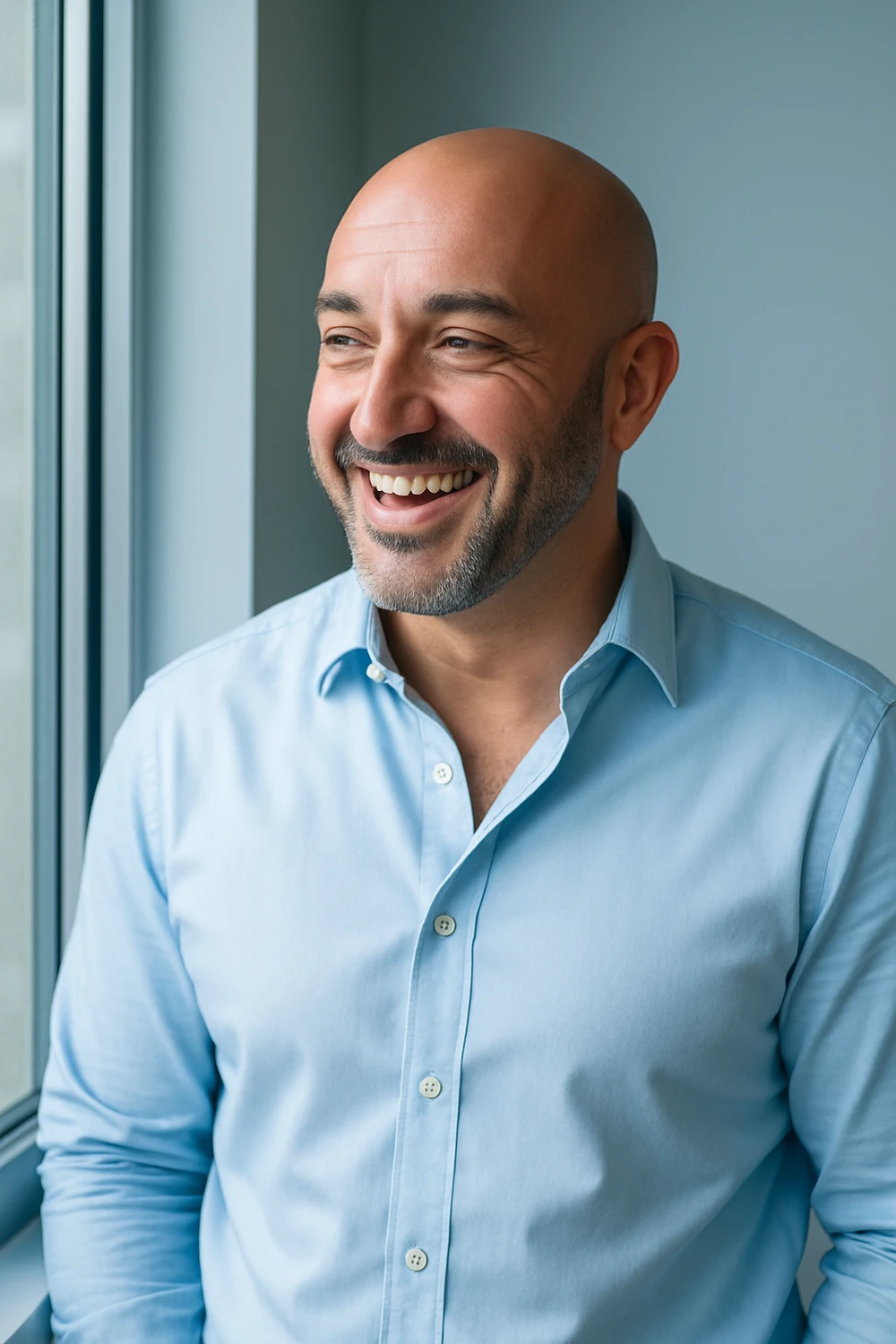
Après des années de traumatismes, de dépendance et de pertes, Ali a trouvé la force de reconstruire sa vie grâce au soutien d'une équipe compatissante, à un sentiment d'appartenance à une communauté et à son engagement envers un processus de guérison à long terme.

Minh

Après 32 ans de dépendance, Minh Pham a trouvé l'espoir, la guérison et une nouvelle voie à la clinique Hader. Son parcours témoigne de la puissance de la communauté, de la compassion et du courage.

Peter El-Khouri

Après plusieurs rechutes, Peter a trouvé un rétablissement durable grâce à Hader. Découvrez comment la thérapie, la communauté et les soins cliniques l'ont aidé à reprendre sa vie en main.

Designed for safety, comfort and recovery

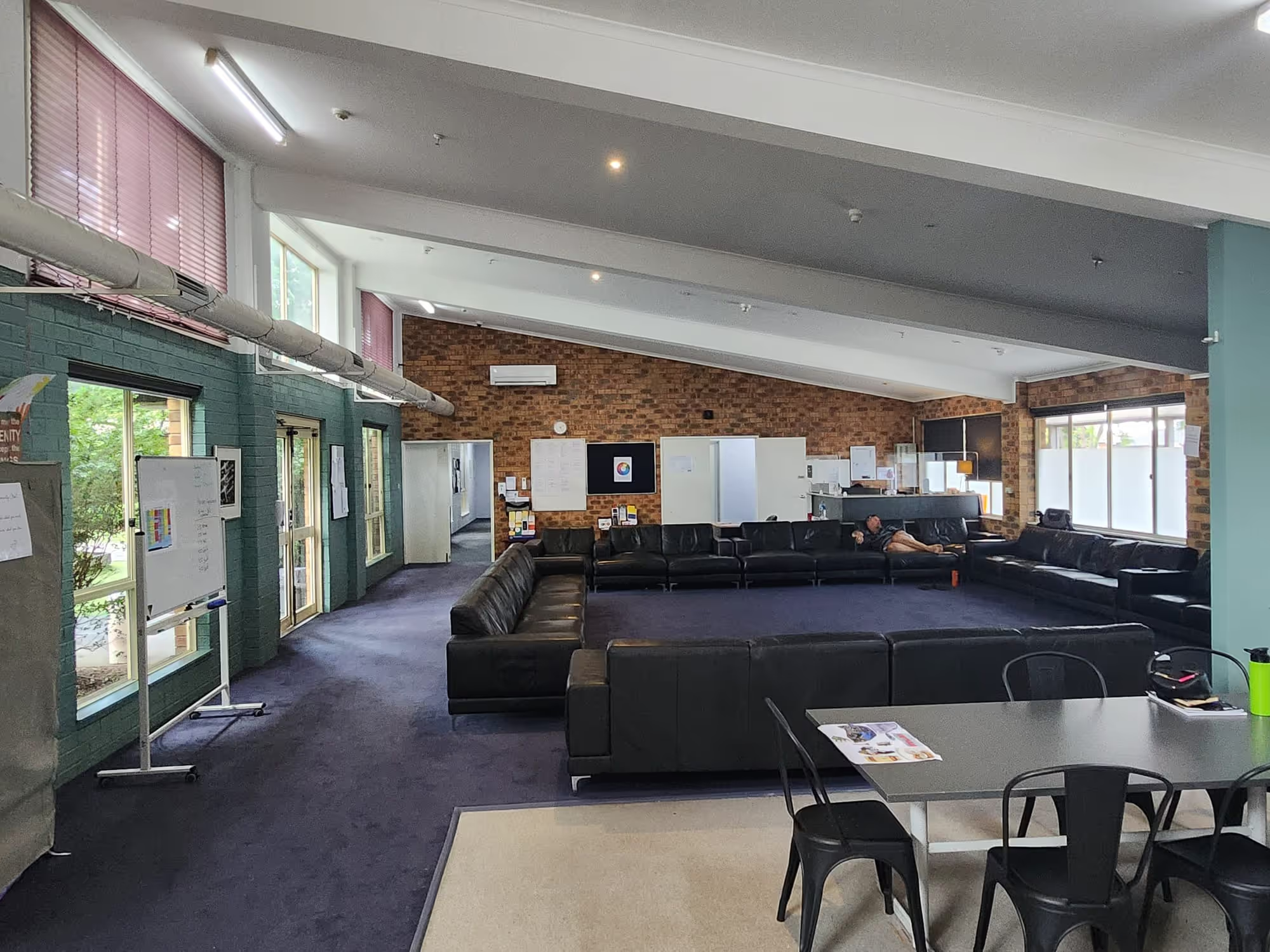
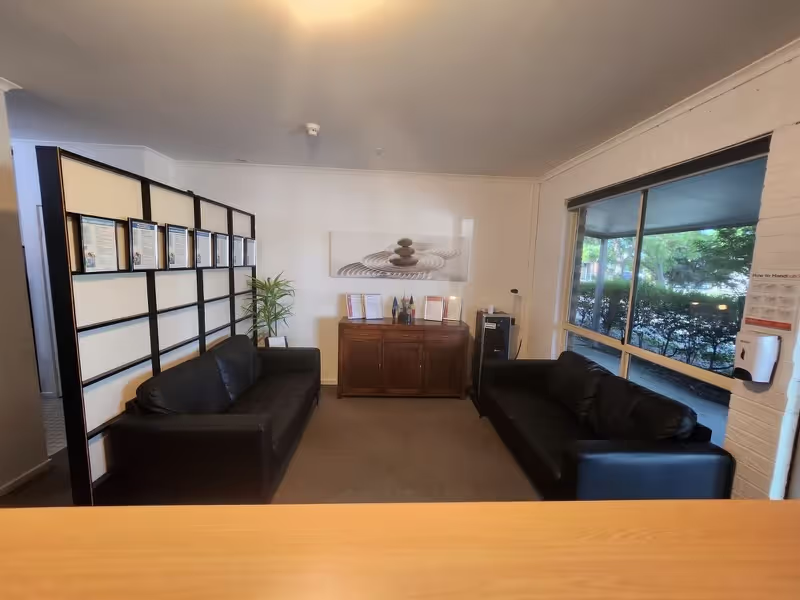
A structured inpatient setting focused on healing

Inpatient rehab takes place in a calm, residential environment designed to support focus, connection and long-term recovery. With on-site medical oversight, therapeutic spaces, and consistent daily structure, care is delivered in a way that helps you stabilise, engage fully in treatment, and begin rebuilding your life with confidence.


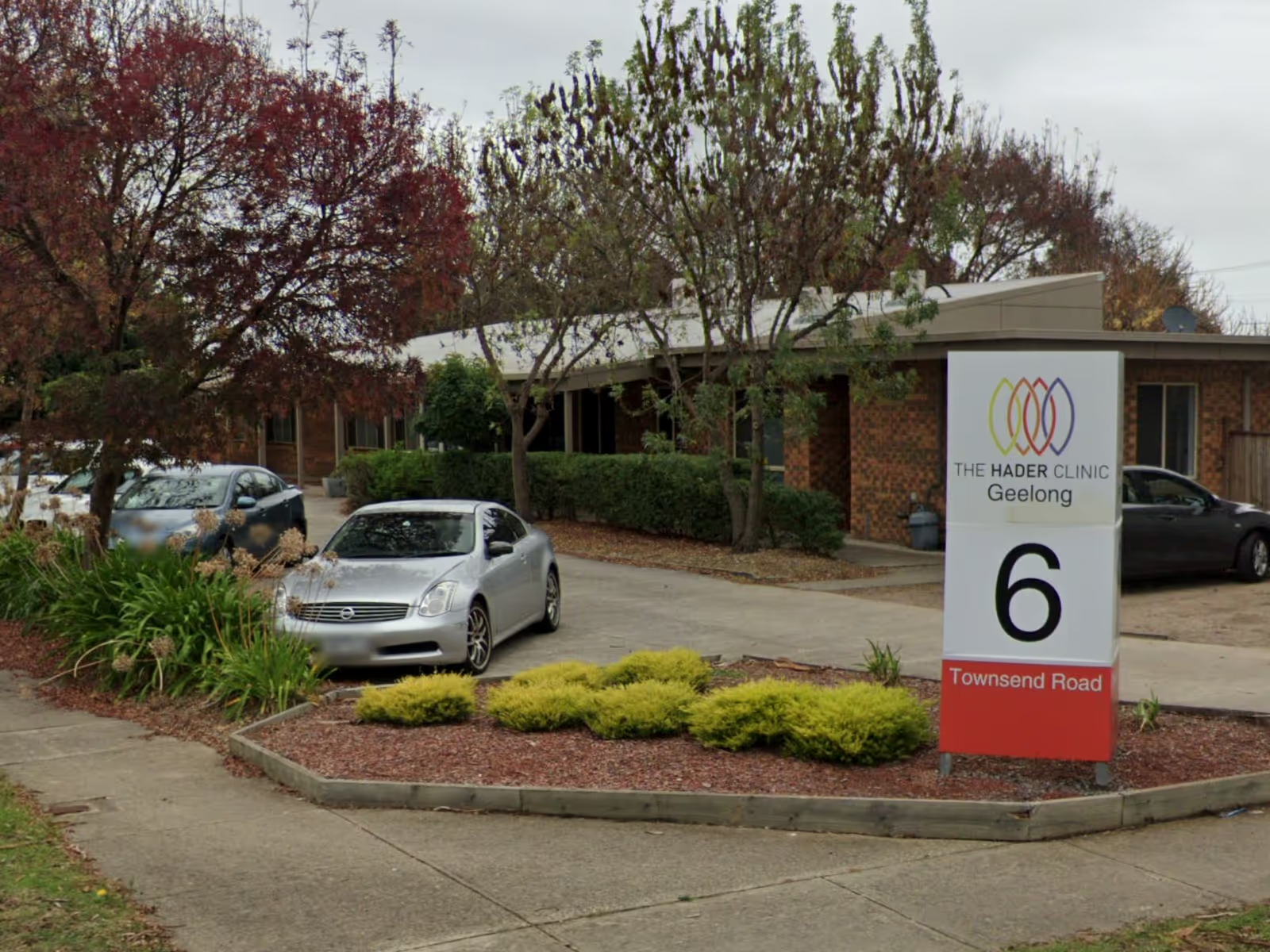
Geelong

Medically supported detox, inpatient residential rehabilitation, and transitional housing programs.

6-8 Townsend Road, St Albans Park VIC 3219

100%

Les clients ont reçu un plan de traitement personnalisé.

92%

Avoir effectué la totalité du séjour hospitalier recommandé.

72%

Amélioration de la santé mentale signalée à la sortie.

89%

N'a pas fait de rechute au cours des 30 premiers jours suivant la cure de désintoxication.

Recovery backed by real results

Outcomes you can count on

We track long-term success, not just attendance. Our inpatient programs are structured to support every stage of recovery, from detox through to relapse prevention.

Prêt à passer à l'étape suivante ?

You don’t need to have all the answers before reaching out. Whether it’s for yourself or someone you love, we’re here to help you get started.

Passez une évaluation en ligne gratuite

Take a quick, private quiz to explore safe support options.

Réservez une consultation gratuite

 Prenez rendez-vous pour un entretien confidentiel avec un spécialiste à l'heure qui vous convient.

Appelez-nous dès maintenant

Parlez immédiatement à quelqu'un pour obtenir des conseils et du soutien.

Know your options before you begin

Comprendre les coûts et le financement

We make our programs as accessible as possible, with transparent pricing and a range of funding pathways for eligible clients.

Program costs

We offer clear, upfront pricing for all inpatient programs. Costs vary based on treatment length and level of care.

Voir les coûts de rééducation

Options de financement

Private health, self-funding, and external funding may be available depending on your situation and eligibility.

Explorer les options de financement
Notre équipe vous accompagne tout au long du parcours.

Meet the people behind your care

Our clinical and peer support team brings together professional expertise and lived experience, creating a space of safety, trust, and understanding.

Un résident participant à l'un de nos programmes de réadaptation créative, assis dans le jardin et peignant des fleurs.
Image d'Andi Thania
Reconnu par les familles à travers toute l'Australie

Get to know The Hader Clinic

For more than 20 years, we’ve helped people recover from addiction and reconnect with themselves, their families, and their futures.

Vous n'êtes pas seul dans cette situation.

Help for yourself or someone you love

Whether you're seeking rehab for yourself or trying to help someone you care about, we have guidance and services designed to support both paths.

Rééducation pour moi-même

Practical, personal help when you're ready to begin your own recovery journey.

Une femme est assise recroquevillée sur un canapé près d'une fenêtre lumineuse, l'air pensif et inquiet.

Rééducation pour un proche

Support and advice for families navigating addiction and recovery together.

Un couple est assis ensemble dans le bureau d'un thérapeute, écoutant avec attention et soutien.
One decision can change everything

Faites le premier pas vers la guérison

Reaching out can feel overwhelming, but it’s often the beginning of something better. Talk to someone who understands what you're going through.

Parlez à quelqu'un qui comprend

Merci ! Votre demande a bien été reçue !
Oups ! Une erreur s'est produite lors de l'envoi du formulaire.
Honest answers for your next step

Inpatient rehab FAQs

How does Hader decide if inpatient rehab is the right fit for me?

When you reach out to us, we begin with a confidential assessment to understand your circumstances, including the severity of your drug and alcohol use, your living situation, and any co-occurring mental health condition. This helps us determine if inpatient addiction treatment is the safest and most effective next step.

Our admissions team works closely with clinicians to assess your physical health, psychological wellbeing, support system, and personal goals. We’ll talk with you (and your GP, if needed) to build a clear picture of your needs.

Inpatient rehab is often recommended if you’re in crisis, unable to stop using on your own, have a history of relapse, or are living in an environment that isn’t supportive of recovery. For many people, a supervised, structured, and supportive environment is what makes recovery possible. If inpatient care isn’t right for you, we’ll suggest other pathways, including outpatient rehab or short-term rehab options.

Can I enter inpatient rehab if I’m on medication for mental health?

Yes, many of our clients take medication for depression, anxiety, bipolar disorder, or other mental health conditions. Our inpatient rehab centre is equipped to manage medications as part of your broader treatment plan safely.

We work in partnership with your existing mental health care providers, or we can refer you to a psychiatrist if needed. Our multidisciplinary care team includes nurses, case managers, and counsellors who monitor how your medication is supporting your recovery journey.

In fact, treating mental health and substance use together is essential. If your symptoms are untreated or mismanaged, they can interfere with your ability to engage in the behavioural and psychological work of recovery. Medication may be a stabilising factor that allows you to gain insight, engage in therapy, and move through the stages of change with more clarity.

You won’t need to stop necessary medication before entering care. Our accommodating mental health rehab programs will keep you safe and healthy throughout your inpatient stay.

How does The Hader Clinic support cultural or religious needs?

We recognise that cultural safety and spiritual support can be vital to healing. That’s why we offer dedicated pathways for Aboriginal and Torres Strait Islander clients, including access to culturally informed staff and care models that reflect the values of their communities. Our rehab services for Aboriginal communities are designed to offer respect, connection, and relevance in every part of care.

We also work to meet the needs of clients from diverse religious backgrounds. Whether that means supporting space for prayer, honouring dietary restrictions, or integrating personal faith into recovery, our team approaches every request with flexibility and respect. This forms part of our broader faith-based addiction recovery options, which acknowledge the role spirituality can play in healing.

What support do you offer if I’m coming from interstate or regional areas?

We regularly welcome clients from outside Melbourne, including rural Victoria and other states. If you’re travelling for care, our admissions team can help coordinate transport options and plan for arrival.

We also understand the added stress of being far from home. Our staff provide extra emotional and logistical support to interstate clients, including contact with family, transition planning, and a steady routine to help you settle in. We aim to create a therapeutic community that feels safe and grounded, no matter where you’ve come from.

We may also be able to assist with documentation for Centrelink or private health fund claims if required. If you’re unsure about whether travelling for inpatient care is realistic for you, we’re happy to talk it through and help you explore your options.

What if I don’t feel ready to leave at the end of my inpatient stay?

It’s very common to feel uncertain as your discharge date approaches. Recovery doesn’t follow a set timeline, and sometimes the standard length of stay isn’t quite enough. At The Hader Clinic, we assess your readiness collaboratively, taking into account your mental health, physical stability, support network, and personal confidence.

If you’re not ready to leave, there are several pathways forward. You may be able to extend your inpatient stay, shift into one of our short-term programs, or transition into step-down care like day programs or outpatient rehab. Preventing relapse is a key part of our planning, so we take great care to ensure you're not leaving before you're ready.

We’ll help you focus on your recovery at every stage, even if that means staying a little longer to solidify the changes you’ve worked hard to make.

Can I move into transitional housing straight from inpatient care?

Yes. If it’s clinically appropriate, we can help you step down into transitional housing after completing an inpatient program. Many clients choose this path to maintain structure and accountability while re-entering daily life.

Our transitional housing program offers shared accommodation, peer support, and access to case management and group therapy. It’s ideal for people who still need support but no longer require 24/7 supervision. You’ll continue working on behavioural and psychological goals while gaining more independence and rebuilding your living situation.

This bridge between inpatient care and full community reintegration can be a crucial stage in the journey to recovery.