When bipolar disorder and substance use collide

Rehab for bipolar disorder and addiction

Le trouble bipolaire est complexe, en particulier lorsqu'il est associé à une addiction. Notre programme de réadaptation en milieu hospitalier aide les personnes atteintes de trouble bipolaire à l'aide de traitements éprouvés qui traitent ces deux troubles.

Faites une auto-évaluation ou parlez à quelqu'un dès maintenant, sans aucune obligation.

A woman dressed in black lies on a brown leather couch, looking upward thoughtfully with one hand on her forehead, in a dimly lit room with a maroon wall.

Inpatient rehab for bipolar and substance use

Dual diagnosis care from experienced mental health professionals

Structured daily routine that supports emotional stability

Bipolar disorder treatment using evidence-based methods

A woman sits quietly on a sofa during her inpatient stay at The Hader Clinic, reflecting on the emotional lows of bipolar disorder and beginning her recovery.
Managing bipolar and addiction together

A dual diagnosis approach built around stability

More than half of people diagnosed with bipolar disorder also experience a substance use disorder. When these conditions occur together, they often amplify each other, leading to greater instability, higher relapse risk, and disrupted treatment.

According to the Bipolar Disorder and Comorbid Use of Illicit Substances study, the most effective treatment combines psychiatric and addiction support in one place. Our residential rehab program does exactly that, helping people with bipolar disorder stabilise, reduce reliance on substances, and rebuild emotional structure and insight.

  • Begin in our Geelong hospital with medical detox and psychiatric support to help stabilise mood and manage withdrawal safely
  • Continue in our residential program, where therapy, structure, and medication work together to promote stability
  • Choose our full 90-day program for the time and consistency needed to manage both bipolar symptoms and substance use

Nous vous appellerons quand cela vous conviendra, sans aucune pression pour vous engager.

Designed for long-term recovery

What’s included in our bipolar disorder and addiction treatment plans

We offer a structured inpatient setting that balances therapy, medication support, emotional regulation, and behavioural routines. Each program is guided by your needs and diagnosis.

  • Daily group therapy and individual sessions
  • Psychiatric oversight for diagnosis and medication reviews
  • Mindfulness, art therapy, and social rhythm tools
  • Education on relapse prevention and emotional cycles
  • Support for major depression and bipolar depression
  • Evening routines to slow thinking and reduce agitation
More than just bipolar rehab

Help for overlapping mental health conditions

We support clients with complex or unclear diagnoses, including overlapping symptoms like depression, anxiety, trauma, and emotional dysregulation.

TSPT

Soins fondés sur des données probantes pour le syndrome de stress post-traumatique (SSPT) et la toxicomanie. Nous aidons les personnes à se stabiliser, à surmonter leur traumatisme et à se construire une vie plus sûre et plus épanouie.

Schizophrénie

La réadaptation pour la schizophrénie nécessite des soins spécialisés et intégrés. Nous traitons les symptômes psychotiques, stabilisons la santé mentale et aidons les personnes à gérer leur dépendance.

Trouble de la personnalité

Le trouble de la personnalité borderline et la dépendance vont souvent de pair. Les deux peuvent être accablants, mais avec un traitement adapté, il est possible de s'en sortir. Vous n'avez pas à y faire face seul.

TOC

Le trouble obsessionnel compulsif et la consommation de substances psychoactives peuvent se renforcer mutuellement, rendant la vie quotidienne ingérable. Mais avec des soins adaptés, il est possible de s'en sortir.

Violence domestique

Réadaptation en matière de toxicomanie, axée sur le soutien et tenant compte des traumatismes, pour les personnes touchées par la violence conjugale (IPV), passée ou présente.

Dépression

Nous aidons les personnes souffrant de dépression et de dépendance grâce à des traitements fondés sur des données probantes et empreints de compassion. Notre programme hospitalier offre un soutien intégré pour la santé mentale, la consommation de substances psychoactives et les facteurs de stress qui sous-tendent ces deux problèmes.

Bipolaire

Le trouble bipolaire est complexe, en particulier lorsqu'il est associé à une addiction. Notre programme de réadaptation en milieu hospitalier aide les personnes atteintes de trouble bipolaire à l'aide de traitements éprouvés qui traitent ces deux troubles.

Anxiété

Réadaptation pour le traitement de la toxicomanie et de l'anxiété

Gestion de la colère

La colère incontrôlée et la consommation de substances psychoactives vont souvent de pair. Nous aidons nos clients à comprendre les causes profondes de leur comportement, à reprendre le contrôle et à se rétablir définitivement.

TDAH

Le TDAH peut rendre la dépendance plus difficile à traiter, mais avec une structure, un soutien et des soins adaptés, le rétablissement est tout à fait possible.

Education and understanding build clarity

What you need to know before starting rehab

Bipolar disorder is a lifelong condition that affects mood, energy, and decision-making. With the right support, people with bipolar disorder can live full and stable lives, including recovery from substance use.

Qu'est-ce que le trouble bipolaire ?

Bipolar disorder is a mental health condition that causes shifts between episodes of depression and mania. It can affect sleep, energy, focus, and relationships. The disorder may begin during adolescence or adulthood and…

Symptoms of bipolar disorder

Symptoms vary by type of bipolar disorder. Common signs include elevated mood, impulsive decisions, rapid speech, agitation, hopelessness, and social withdrawal.

Causes and contributing factors

Bipolar disorder may run in families, and it often appears alongside trauma or addiction. Risk factors include brain chemistry, stress, and sleep disruption.

Diagnosis and treatment options

There are several types of bipolar disorder, including bipolar I, bipolar II, and cyclothymia. Diagnosis involves clinical assessment, history, and ongoing observation.

Who benefits from bipolar rehab?

Anyone diagnosed with bipolar who is also struggling with addiction, emotional instability, or loss of function. We support clients with clear diagnoses, mixed features, or early-stage episodes.

OUTIL D'AUTO-ÉVALUATION CONFIDENTIEL

Vous vous inquiétez au sujet de votre consommation d'alcool ou de drogues ?

Ce petit questionnaire confidentiel prend moins de deux minutes et peut vous aider à comprendre ce qui se passe. Choisissez la catégorie qui vous semble la plus pertinente — qu'il s'agisse d'alcool, de drogues ou d'un mélange de préoccupations — et nous vous guiderons à travers quelques questions simples auxquelles vous répondrez par oui ou par non.

À la fin, nous vous dirons si vos réponses suggèrent qu'il est peut-être temps d'envisager une cure de désintoxication et nous vous proposerons des options sûres et confidentielles pour vous aider à vous lancer.

Répondez au questionnaire dès maintenant
From stabilisation to long-term support

A structured pathway with coordinated care

We offer a full pathway of care, beginning with inpatient rehab and extending into transitional housing, outpatient therapy, and digital aftercare. Each program is coordinated to ensure continuity and stability across every stage of your recovery.

Our team helps you transition from detox and stabilisation into therapeutic treatment and then back into daily life with tools, insight, and confidence.

Programme résidentiel

Réadaptation en résidence avec soutien structuré, thérapie et formation aux compétences de la vie courante dans un environnement sûr et axé sur le rétablissement.

Jeune couple se tenant la main pendant une séance de conseil, cherchant du soutien à travers une thérapie familiale et relationnelle.

Programme familial

Éducation, soutien de groupe et counseling pour aider les familles à comprendre la dépendance et à soutenir le rétablissement de leur proche.

Une femme participe à une séance de rétablissement virtuelle depuis son domicile, suivant une thérapie structurée dans le cadre du programme de rééducation en ligne Hader at Home.

Hader à la maison

Un programme de rétablissement entièrement numérique comprenant des contrôles quotidiens, une thérapie en ligne et des cahiers d'exercices autoguidés pour les soins post-réadaptation.

Une femme brune sourit et partage une avancée personnelle lors d'une thérapie de groupe, célébrant les progrès accomplis dans son parcours de rétablissement en ambulatoire.

Programme ambulatoire intensif

Soutien structuré en matière de dépendance, comprenant une thérapie, des séances de groupe et la prévention des rechutes, conçu pour s'adapter à la vie quotidienne.

Un résident discute avec son conseiller en réadaptation.

Conseil

Thérapie tenant compte des traumatismes, counseling en matière de toxicomanie et soutien familial disponibles en personne ou via des séances en ligne sécurisées.

Une femme embrassant son partenaire après une intervention sincère à la maison, lui offrant son soutien et ses encouragements alors qu'il accepte de chercher de l'aide pour lutter contre sa dépendance.

Interventions

Soutien professionnel pour aider les familles à mettre en place une intervention sûre et structurée et à orienter leur proche vers un traitement.

Vue depuis une résidence privée de luxe donnant sur un jardin sablonneux et le front de mer, avec des chaises longues et un aménagement paysager tropical conçu pour un repos paisible et discret.

Rééducation des cadres

Traitement privé et individuel dans un cadre luxueux, en toute discrétion et avec un programme de rétablissement personnalisé.

Hommage à l'ANZAC Day avec un fusil vintage .303 de l'armée australienne, un chapeau mou et un insigne représentant le soleil levant, des plaques d'identité de soldat, une couronne de fleurs et le drapeau australien en arrière-plan.

Réadaptation DVA

Soins hospitaliers spécialisés tenant compte des traumatismes pour les anciens combattants et les premiers intervenants, entièrement financés pour les clients admissibles du ministère des Anciens Combattants.

Un résident assis sur un canapé dans un espace commun, travaillant sur son journal intime dans le cadre de sa réadaptation ordonnée par le tribunal.

Réadaptation ordonnée par le tribunal

Programme hospitalier structuré comprenant une cure de désintoxication, une thérapie et un rapport médico-légal afin de satisfaire aux exigences en matière de caution ou de condamnation.

Un homme vivant dans un logement de transition lace ses chaussures alors qu'il se prépare pour une nouvelle journée de travail, reconstruisant sa vie et son indépendance après une rééducation en milieu hospitalier.

Logement de transition

Hébergement axé sur le rétablissement, avec thérapie, structure et soutien pour faire le pont entre la réadaptation et la vie autonome.

Séance de thérapie de groupe de soutien dans un centre de désintoxication médicale, où divers clients partagent leurs expériences et où un psychologue encourage gentiment un nouveau participant.

Désintoxication à l'hôpital

Désintoxication sous surveillance médicale 24 heures sur 24, 7 jours sur 7, dans un hôpital privé agréé, comprenant une aide au sevrage et des soins psychiatriques.

Safe, supported, and tailored to you

Our admissions process

Étape1

Talk to a mental health professional

We’ll help you clarify your goals, explore your treatment options, and determine if our program is the right fit.

Étape2

Get an intake plan designed for your needs

We’ll create a personalised treatment plan that fits your timeline, your symptoms, and your level of support.

Étape3

Begin your program with expert guidance

Whether you're starting with detox, rehab, or transitional care, we’ll support you from day one.

Nous sommes là quand vous êtes prêt : prenez rendez-vous pour un appel ou discutez avec quelqu'un dès maintenant.

A rehab program that actually works

What makes our bipolar rehab unique

Our rehab program was designed for people with bipolar disorder, not retrofitted. That means therapy, routines and support are all structured to reduce chaos, regulate mood, and help clients build a daily rhythm they can maintain.

Purpose-built for dual diagnosis

We treat bipolar disorder and addiction together with a clinical framework that supports both.

Structure without rigidity

Daily routine, therapeutic rhythm and flexibility for clients experiencing instability or overwhelm.

Stabilisation and medication support

Our psychiatric team supports medication reviews and emotional regulation throughout the program.

Designed for real-world recovery

Clients leave with structure, insight and relapse prevention tools that support long-term change.

A full suite of rehab services

More than bipolar treatment

We support a wide range of substance use and mental health conditions. Whether you're dealing with alcohol, prescription drugs, or behavioural dependencies, our team can help you move forward with care that fits.

Cure de désintoxication alcoolique

Programmes personnalisés qui traitent les répercussions physiques, émotionnelles et comportementales de la dépendance à l'alcool.

Réadaptation pour toxicomanes

Programmes hospitaliers structurés et adaptés pour une gamme de drogues illicites et de médicaments sur ordonnance.

Rééducation d'urgence

Options d'admission accélérée pour les personnes en situation de crise qui ont besoin de soins urgents et stabilisateurs.

Prévention des rechutes

Stratégies pratiques et concrètes pour gérer les déclencheurs, éviter les rechutes et maintenir un rétablissement à long terme.

Evidence-based, client-focused, accredited

Nous répondons aux normes nationales les plus strictes.

We’re fully accredited under the National Safety and Quality Health Service (NSQHS) Standards, developed by the Australian Commission on Safety and Quality in Health Care (ACSQHC).

Real people, real change

Stories from our clients

We treat individuals, not statistics. Every recovery journey is different, and each one reveals what’s possible with the right support. Read honest, hopeful stories from our clients and their loved ones.

Ali Ademi

Après des années de traumatismes, de dépendance et de pertes, Ali a trouvé la force de reconstruire sa vie grâce au soutien d'une équipe compatissante, à un sentiment d'appartenance à une communauté et à son engagement envers un processus de guérison à long terme.

Minh

Après 32 ans de dépendance, Minh Pham a trouvé l'espoir, la guérison et une nouvelle voie à la clinique Hader. Son parcours témoigne de la puissance de la communauté, de la compassion et du courage.

Peter El-Khouri

Après plusieurs rechutes, Peter a trouvé un rétablissement durable grâce à Hader. Découvrez comment la thérapie, la communauté et les soins cliniques l'ont aidé à reprendre sa vie en main.

A safe place to recover

Care designed to support healing

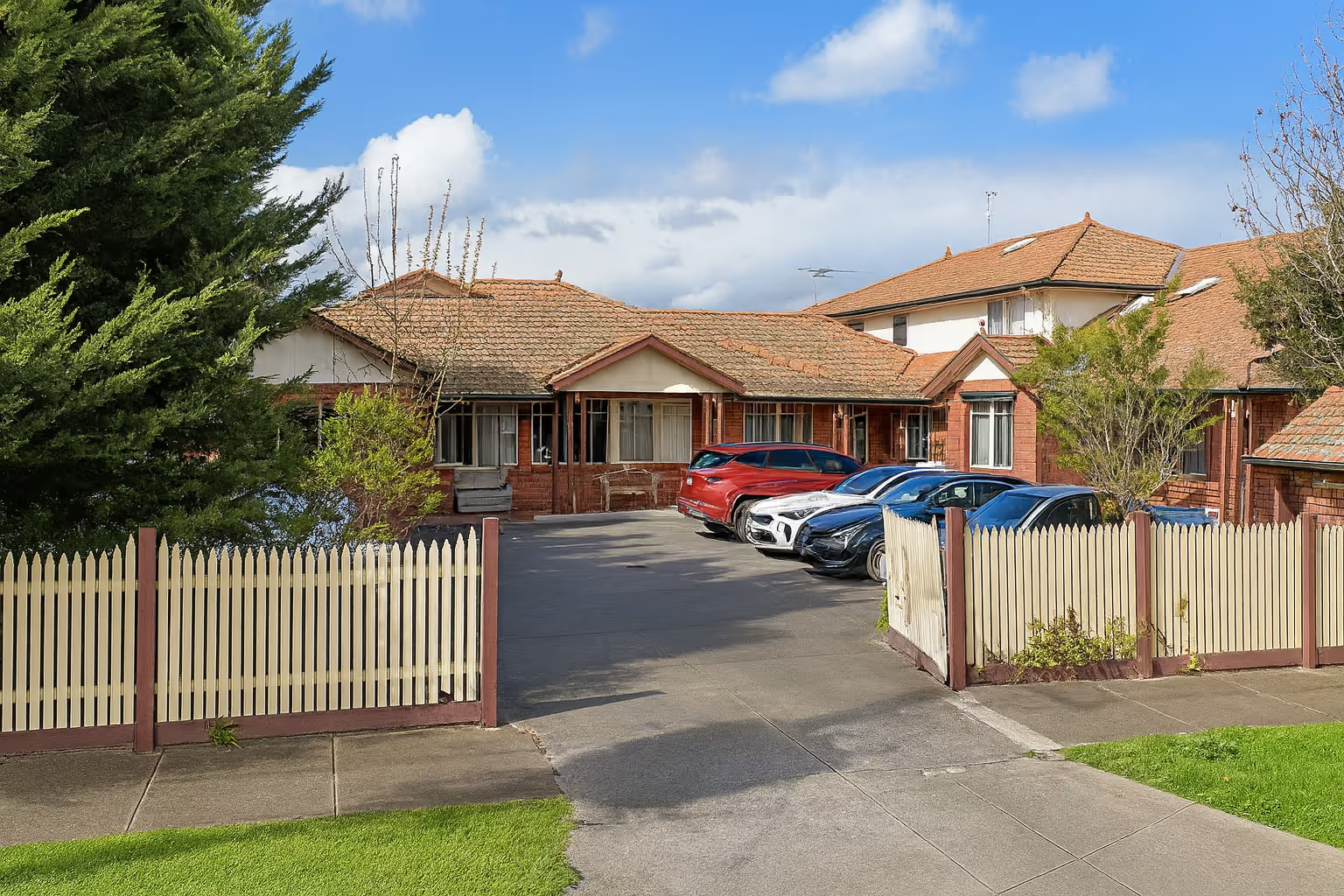
We provide inpatient care and transitional support through a single, coordinated program delivered in Victoria. Treatment is designed to prioritise privacy, consistency, and therapeutic structure, supporting both mental health recovery and long-term wellbeing. Every element of care is intentionally designed to help clients feel safe, supported, and focused on recovery.

Geelong

Medically supported detox, inpatient residential rehabilitation, and transitional housing programs.

6-8 Townsend Road, St Albans Park VIC 3219

83%

Les clients qui terminent notre programme de 90 jours restent sobres après 12 mois.

72%

Les clients s'inscrivent au programme de suivi ou au logement de transition Hader@Home afin de favoriser un engagement à long terme et de réduire le risque de rechute.

60%

Les clients qui ont accès à un suivi structuré ont beaucoup plus de chances de rester sur la voie du rétablissement et d'éviter une rechute.

50%

La moitié des personnes souffrant d'une addiction présentent également un trouble mental concomitant, ce qui souligne la nécessité d'un soutien en matière de double diagnostic.

Evidence that backs our approach

Bipolar rehab outcomes that matter

We track more than attendance. Our outcome data focuses on long-term emotional stability, relapse prevention, and improved daily functioning for people with bipolar disorder.

Consultez nos sources ci-dessous :

Start your recovery with expert support

You don’t need to have everything figured out. Whether you’re asking for yourself or a loved one, we’re here to listen, guide and support your next step.

Passez une évaluation en ligne gratuite

Répondez à un petit questionnaire confidentiel pour savoir si une cure de désintoxication pourrait vous aider et découvrir les options de soutien sécurisées qui s'offrent à vous.

Réservez une consultation gratuite

 Prenez rendez-vous pour un entretien confidentiel avec un spécialiste à l'heure qui vous convient.

Appelez-nous dès maintenant

 Parlez immédiatement à quelqu'un pour obtenir des conseils et du soutien.

Flexible, inclusive and transparent

Coûts de réadaptation et options de financement

We offer several funding pathways and can help you explore the best option (or combination of options) based on your needs and eligibility.

Coûts de rééducation 

Our pricing covers every part of your inpatient stay, including accommodation, meals, therapy, clinical care, medication reviews and discharge planning.

Explorer les options de réadaptation

Options de financement 

We accept a range of payment options, including private health insurance, superannuation release, DVA, and tailored payment plans. We’ll help you find what works.

En savoir plus sur les coûts de financement
The team behind your recovery

Clinical, compassionate and experienced

Our staff includes psychiatrists, nurses, therapists, peer workers and case managers, many of whom have lived experience with addiction and mental health recovery.

Image d'Andi Thania
The team behind your recovery

À propos de la clinique Hader

We’ve supported Australians with addiction and mental health conditions for more than 25 years. Our programs are trauma-informed, clinically accredited and shaped by real-world experience.

Support for yourself or someone else

Rehab for every kind of journey

Whether you’re seeking help for yourself or supporting someone you love, we’ll guide you toward the right program, explain your options, and support you from day one.

Rééducation pour vous-même

Individualised programs for people living with bipolar and addiction who are ready to stabilise, recover, and build a better future.

Une femme est assise recroquevillée sur un canapé près d'une fenêtre lumineuse, l'air pensif et inquiet.

Rééducation pour un proche

Programs, advice and emotional support for those trying to help someone with bipolar and substance use challenges.

Un couple est assis ensemble dans le bureau d'un thérapeute, écoutant avec attention et soutien.
Learn more about bipolar and recovery

Articles that go deeper

These blogs explore the complexities of bipolar disorder, substance use, dual diagnosis and real-world recovery. They’re written to support your next step with honest, evidence-informed insight.

A safe place to begin

You don’t need to do this alone

If you’re ready for help, or even just curious about what’s next, we’re here. Whether it’s for yourself or someone you love, we’ll guide you through the options and support your next step.

Parlez à quelqu'un qui comprend

Merci ! Votre demande a bien été reçue !
Oups ! Une erreur s'est produite lors de l'envoi du formulaire.
Obtenez la clarté dont vous avez besoin

Questions fréquentes

Can bipolar disorder and substance use really be treated together?

Yes. Bipolar disorder and substance use often occur together, and they must be treated together. Research shows that individuals with bipolar disorder who also struggle with addiction have higher relapse rates and poorer outcomes unless both conditions are addressed at the same time.

Our rehab program provides integrated treatment for bipolar disorder and substance abuse. That includes psychiatric oversight, therapeutic support, medication stabilisation and addiction-focused care, all in one setting. This kind of comprehensive treatment plan is essential for people dealing with bipolar disorder and substance use, because each condition affects the other.

We also support co-occurring issues like anger management, anxiety, and PTSD, which are common in people with dual diagnoses.

If you’d like to learn more about how bipolar disorder and addiction often overlap, our blog on substance abuse and comorbidity explains the importance of integrated care and why treating both conditions together is so crucial.

What if I don’t have a formal diagnosis yet?

You don’t need to have an existing diagnosis to begin treatment. Many people come to us unsure if they meet the diagnostic criteria for bipolar disorder or whether they’re experiencing another mental health condition.

We start by listening. Our intake and assessment process includes time with a mental health professional who will help you understand your symptoms and explore treatment options that suit your situation.

Whether you're dealing with episodes of mania and depression or symptoms that don’t fit neatly into a label, we’ll guide you toward the right path. You don’t need a diagnosis to get help — just a willingness to start the conversation.

Will this program help with bipolar II or mixed episodes?

Yes. Our program supports people with bipolar I, bipolar II, and mixed presentations. People with bipolar II disorder often struggle with extended depressive episodes and periods of elevated mood that don't reach full mania, but are still highly disruptive.

We also support clients experiencing complex cycles, mood instability, and overlapping symptoms that don’t fit neatly into one form of bipolar. If you're unsure whether you have bipolar II, a milder form of bipolar disorder, or something else entirely, we’ll support you with assessment, stabilisation, and personalised care planning.

If you're currently experiencing a mixed episode — where symptoms of mania or depression happen at the same time — we can help you reduce overwhelm, establish structure, and feel safe again.

What if I’ve tried treatment before and it didn’t work?

Many individuals with bipolar disorder have tried treatment before, and that doesn’t mean recovery isn’t possible. Sometimes the approach wasn’t the right fit. Sometimes it wasn’t integrated, or it didn’t address co-occurring issues like addiction.

At Hader, we offer long-term treatment of bipolar disorder with wraparound support. That means we treat the whole person, not just the symptoms, and we provide a consistent team and stable environment across every stage of care.

We also work closely with family members through our family program to rebuild relationships and offer insight into the lived experience of mental health and addiction.

Recovery can look different for everyone, and the structure of a rehab program plays a big role in success. If you're curious about what to expect, our article on what happens in rehab offers a detailed breakdown of the daily routine, therapies, and support systems that help clients build long-term recovery.

How long does rehab for bipolar typically take?

That depends on your symptoms, your substance use history, and your recovery goals. Many people with bipolar and related disorders benefit from a longer stay, especially if they’re experiencing ongoing instability or struggling to manage bipolar disorder day to day.

At Hader, we recommend at least 30–90 days of inpatient care, followed by transitional support and aftercare. This long-term rehab pathway is especially useful for those with disrupted sleep, frequent mood episodes, or poor treatment adherence.

You can learn more about our long-term rehab options and get help creating a timeline that suits you.

What therapies do you use to treat bipolar disorder?

We combine structured therapies with medication support and emotional regulation. Every client receives a personalised treatment plan built around their symptoms and goals.

Common approaches include CBT, mindfulness, and interpersonal therapy. For some clients, we also use alcohol rehab or drug rehab streams if substance use is a core issue.

We also use social rhythm therapy to help stabilise sleep, structure and energy levels. This is a highly effective approach for treating bipolar depression and managing the highs and lows of bipolar.

Will I still have access to care after I leave?

Yes. Ongoing treatment is a critical part of managing bipolar disorder. We offer several aftercare options — including counselling, online therapy, and relapse prevention planning.

You’ll work with your team before discharge to create a comprehensive treatment plan that supports stability, medication adherence and long-term change. We’ll also help you re-engage with work, study, or community life as part of your recovery process.

Whether you're living with anxiety, adjusting to life after rehab, or still building support networks, we stay in touch and stay involved.

Supporting someone with bipolar disorder and addiction after rehab can be challenging. If you’re unsure how to approach it, our guide on how to convince an addict to go to rehab offers practical tips for families and friends navigating the early stages of recovery together.

Can you help if I’m experiencing suicidal thoughts?

Yes. Many individuals with bipolar disorder experience suicidal thoughts, especially during depressive episodes or mixed states. You are not alone, and support is available. Our inpatient rehab setting provides immediate structure, clinical supervision, and daily therapy to reduce risk and build emotional safety. Treatment can help you move from crisis to recovery. If you’re thinking about suicide, reach out. We’ll help you take the next step safely.